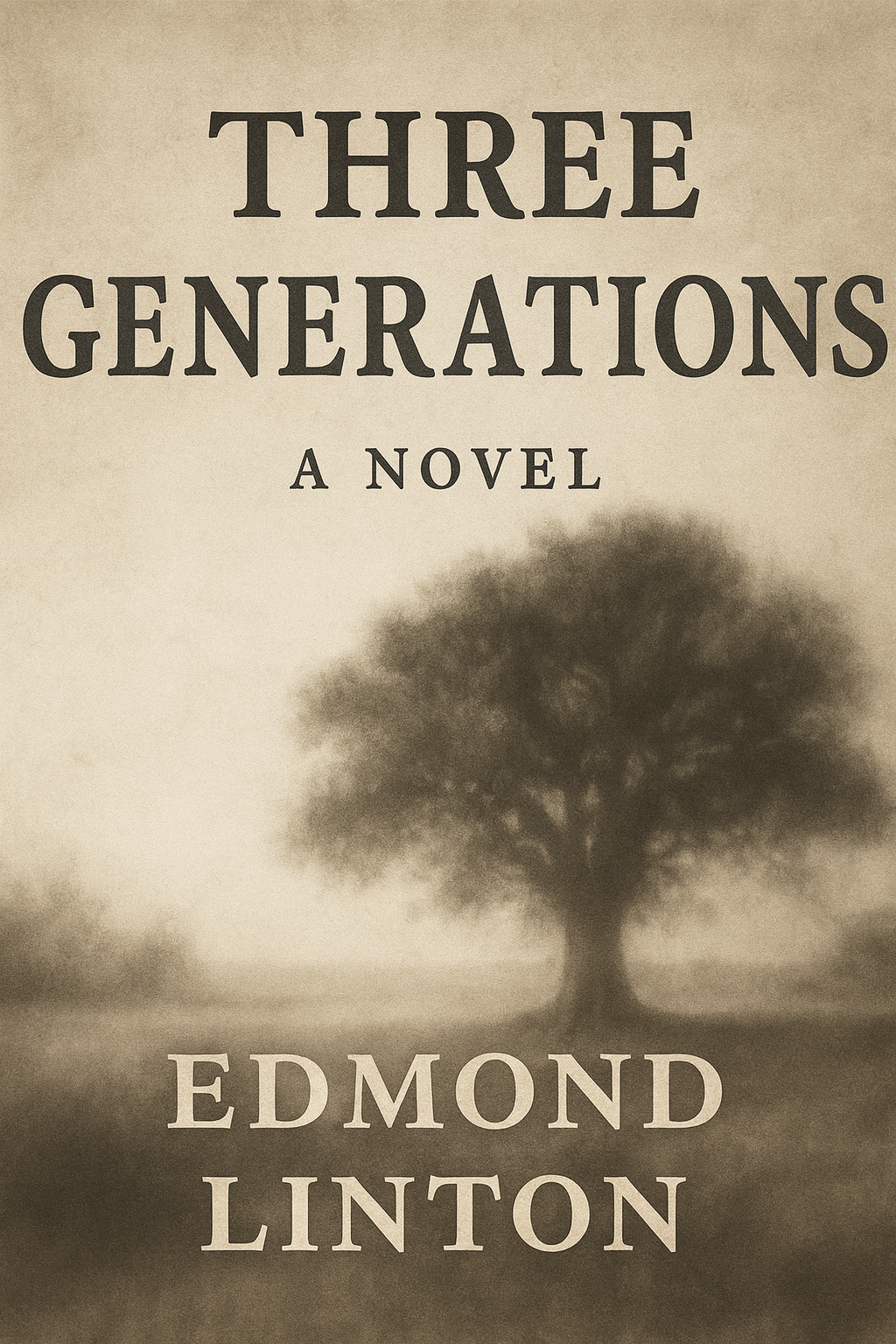
THREE GENERATIONS
A Novel
Based on a True Story
by
Edmond Linton
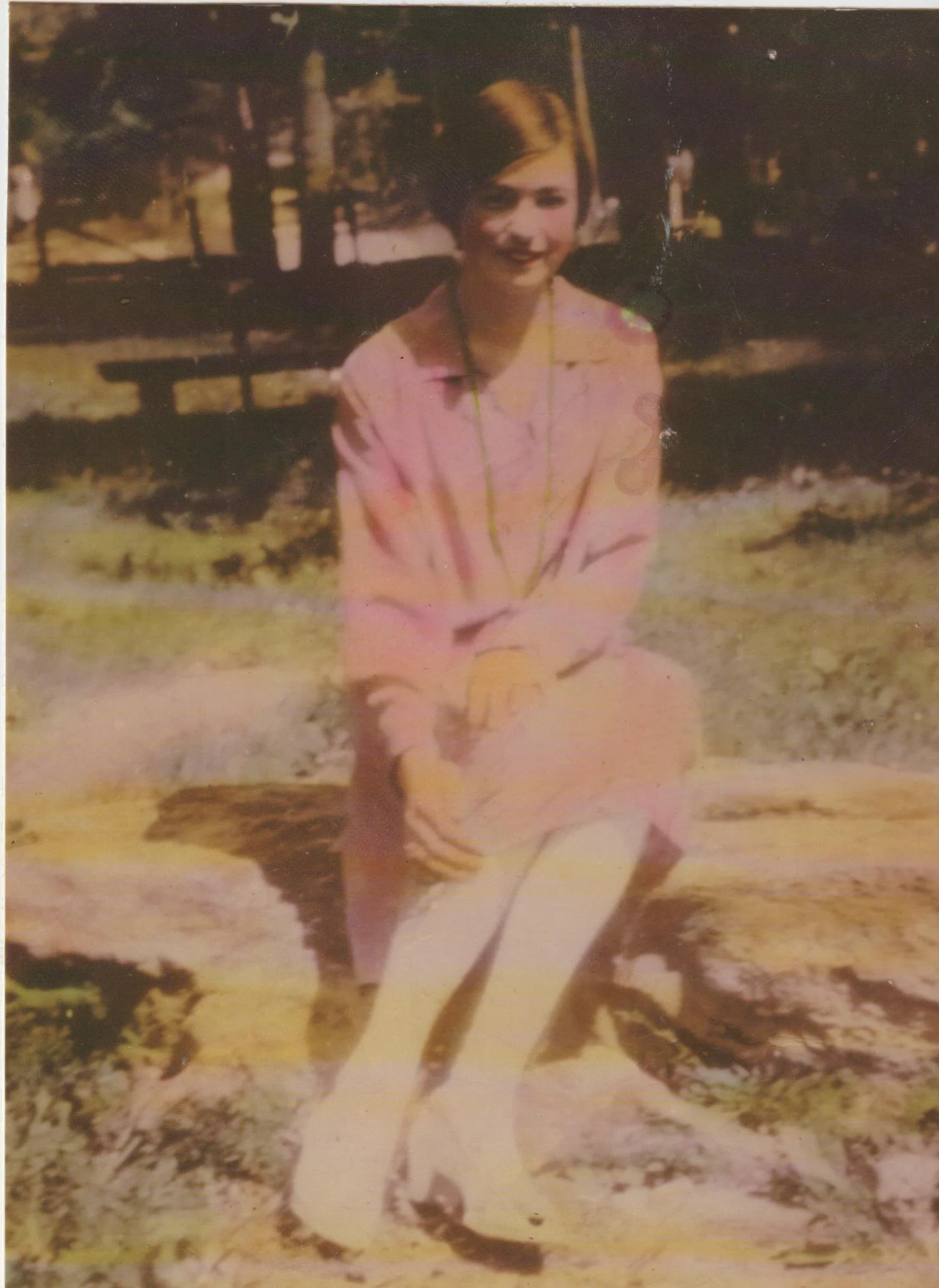
Three Generations is a Southern literary novel about the wounds families inherit and the quiet strengths that carry them forward. Spanning 1918 to the mid-1990s, with an epilogue set in 2003, the book follows three generations of women—Alma, Elizabeth, and their descendants—as they navigate influenza, war, migration, poverty, and the ordinary devastations of marriage, motherhood, and loss.
At its core, the novel asks how people survive what breaks them. Each character faces a private reckoning: the grief that reshapes a life, the duty that becomes a burden, the silence that passes from parent to child. Across decades, the family’s choices echo in patterns of loyalty, abandonment, faith, and resilience. Some repeat the stories they were born into; others fight to rewrite them.
Grounded in historical detail and written with a restrained, lyrical voice, Three Generations explores the emotional legacy of the American South—not through spectacle, but through the intimate moments where love falters, endures, and finally redefines what it means to belong to one another.

A Morning at the Prison
Fog clung to the fences that morning, crawling low along the yard. Brewer walked the perimeter with his collar turned up, hands ungloved, moving with his usual calm but quieter now, as though conserving breath without admitting it. His exhale left ghosts on the air.
Inside the administration wing of the penitentiary, the smell of floor polish and damp wool drifted through the halls. He leaned once against the radiator while checking a report—the heat pushing through his coat like a fever—waiting for the light in his head to steady. The men saw it before he spoke. One offered him a cigarette at noon, the pack held out in silence. Brewer shook his head.
“Trying to quit,” he said, though the truth was simpler: the breath he had could no longer spare the smoke.
Excerpt from Three Generations



The Return of Paul Head
They brought Paul home on a Tuesday afternoon and left him sitting on the front steps with a note from the Veterans Administration and a small duffel bag. No salute, no handshake, no officer to walk him inside. Just a car door slamming, gravel stirring, and the shape of her son—grown taller, leaner, older—sitting on her porch like someone who had forgotten the way in.
He sat with his hands dangling between his knees, fingers tapping, tapping, tapping, as if marking a cadence only he knew. His boots were dusty, the laces tied too tight, the leather cracked. His skin looked pale under the hard Georgia sun, almost blue at the edges.
The paper in his hand was creased, the ink already fading.
United States Veterans Administration Atlanta Regional Office June 3, 1953 Private First Class Paul B. Head, Serial No. 34-187-942, has been discharged from active duty and placed under medical observation. Diagnosis: Combat Fatigue (Neuropsychiatric). Status: Unfit for further service. Patient advised to rest. Family instructed to provide quiet and stable environment. Respectfully, Lt. H. R. Matthews, M.D., Medical Corps.
Alma folded the document once and slipped it into her apron pocket. She opened the screen door, its hinge crying softly.
“Paul,” she said. He nodded, but his eyes didn’t lift.
His hair was slicked back, too precise, the shine too bright—as if he had combed it four or five times to make sure every strand obeyed him.
His face was leaner than she remembered, drawn and hollow beneath a sheen of sweat. He smelled of cigarettes, metal, cold rain, and something she could only name as war.
“Come on in,” she said. He rose slowly, as though waiting for an order that did not come, and stepped inside. His shoulders twitched once, like a man ducking from an invisible blow.
He glanced around the small house—table, stove, the narrow hallway—seeing it all and seeing none of it. His hand brushed the wall, fingertips searching the wood grain as though checking its solidity.
Excerpt from Three Generations

Edmond Linton is a Southern writer whose work blends memory, myth, and generational legacy. A former journalist and documentary producer, he has earned multiple Emmy nominations and received national honors from the Radio and Television News Directors Association, as well as the Lincoln University Award for Diversity in Media. His debut novel, Three Generations, draws from decades of family stories, lived experience, and emotional excavation — a quiet, layered portrait of resilience, place, and the unspoken legacies passed between generations. Linton writes with the clarity of a witness and the empathy of someone who has carried both scars and stories.